

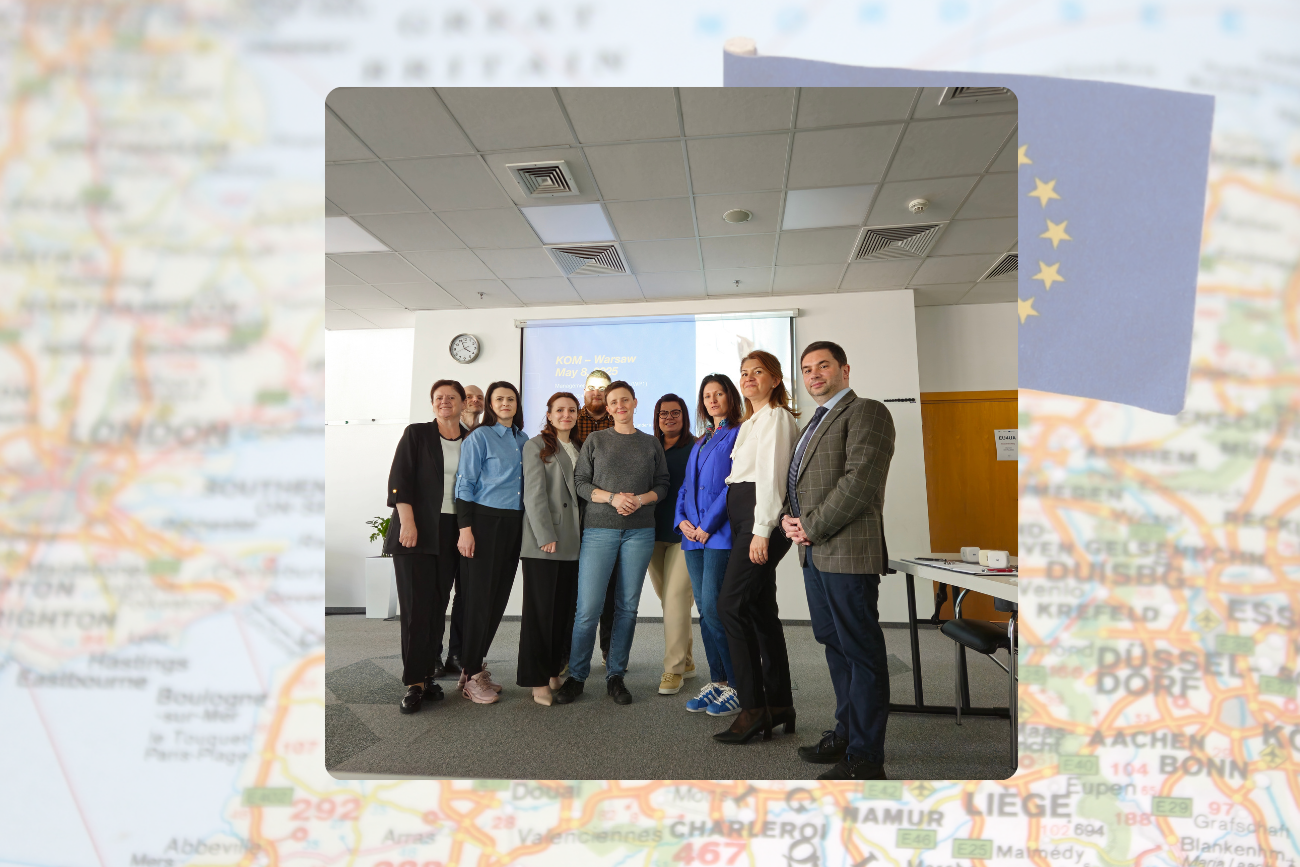
On May 8, the EU4UA project officially launched with a dynamic kickoff meeting in Warsaw, bringing together all nine partner organizations from across Europe. Hosted by FISE and PCG Polska, the event marked the starting point of an ambitious, hands-on effort to create a new European model for refugee integration—one based on real-world practice, research, and collaboration.
With representatives from Romania, Poland, Lithuania, Spain, and Belgium gathered around the table, the Warsaw meeting wasn’t just about introductions. It was about alignment, shared vision, and setting the tone for a project that aims to change how Europe supports refugees—not through theory, but through tested models and practical tools.
A strong start: Clear goals and active coordination
The meeting agenda focused on clarifying roles, finalizing project management tools, and aligning each work package for the months ahead. From signing partnership agreements and initiating payments to reviewing the quality assurance framework, the consortium tackled key operational milestones head-on.
One highlight was the discussion around the project’s evaluation and coordination tools—tracking deliverables, budgets, and events across the lifespan of the project. These tools are essential for keeping partners aligned and ensuring transparent, high-quality results.
Importantly, partners committed to a rigorous review process: every deliverable will undergo both internal and external reviews. This reflects the project’s ambition to serve not just its beneficiaries, but also policymakers, funders, and other stakeholders who need reliable, transferable models of refugee support.
Turning field experience into future policy
The EU4UA project is more than a service delivery initiative. It’s a blueprint project—a transnational effort to document, test, and refine effective models for supporting Ukrainian refugees, with the goal of influencing future European policy.
This isn’t about reinventing the wheel. It’s about learning from what’s already working, identifying gaps, and creating a coherent model that can be scaled, adapted, and funded at EU level.
A blueprint shaped by action, not theory
The energy in the room in Warsaw made one thing clear: EU4UA is not a theoretical exercise. It is rooted in the lived experience of partners who have already supported thousands of Ukrainian refugees through job counseling, social services, education, and psychological support.
By anchoring the blueprint in this hands-on expertise, the project has the credibility and insight needed to develop models that actually work. These models will be co-created with input from beneficiaries, frontline workers, national networks like UNHCR Romania, and academic teams leading the research.
What’s next?
Following the kickoff, each partner is moving forward with their responsibilities: from launching field interviews to drafting policy-oriented deliverables. The consortium will reconvene in late summer to assess progress, share findings, and prepare for the first public presentations of the blueprint components at national and EU levels.
The EU4UA blueprint is in motion—and it starts with collaboration, clarity, and a shared commitment to building systems that serve people better.
Stay tuned as we share updates from the field, interviews with frontline workers, and milestones in building a better future for refugee support across Europe.

Leave A Comment