

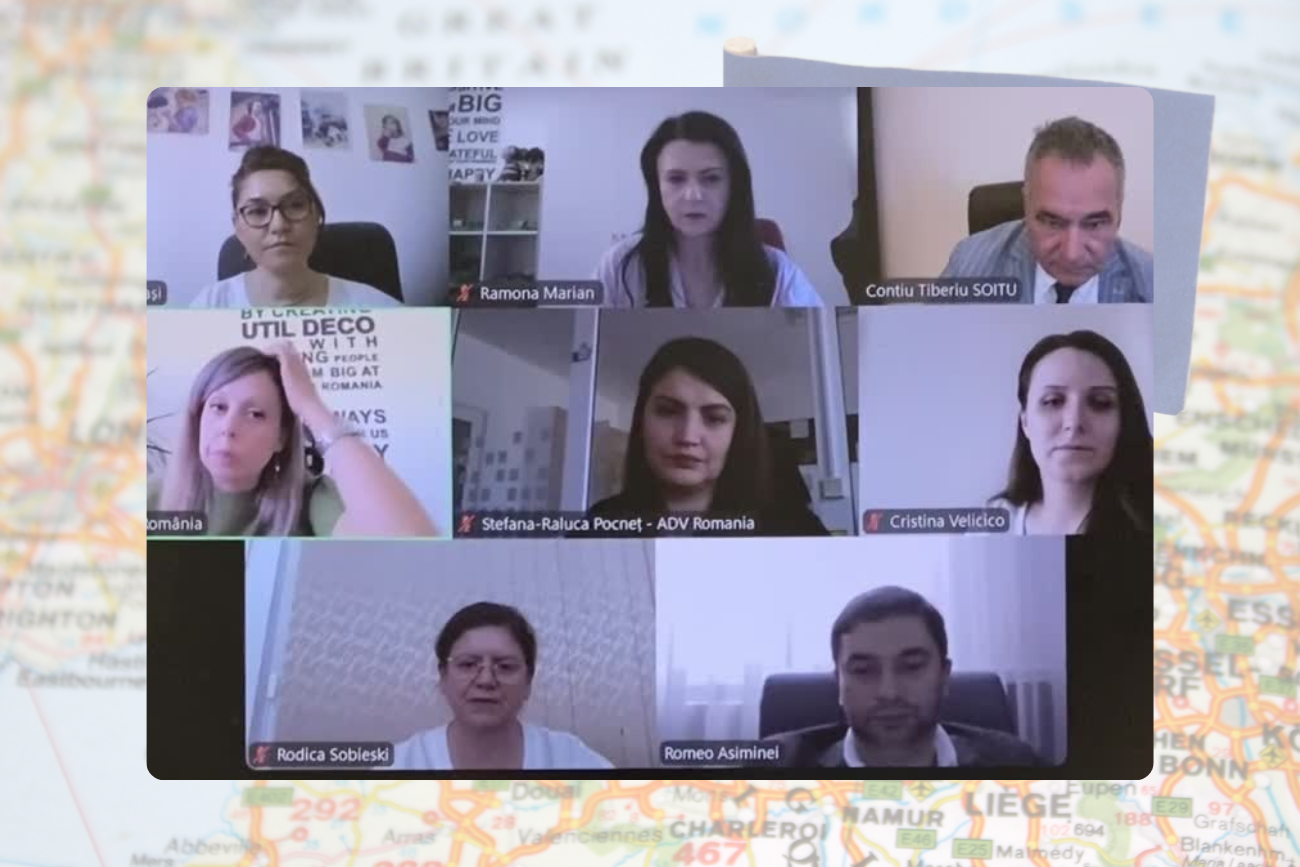
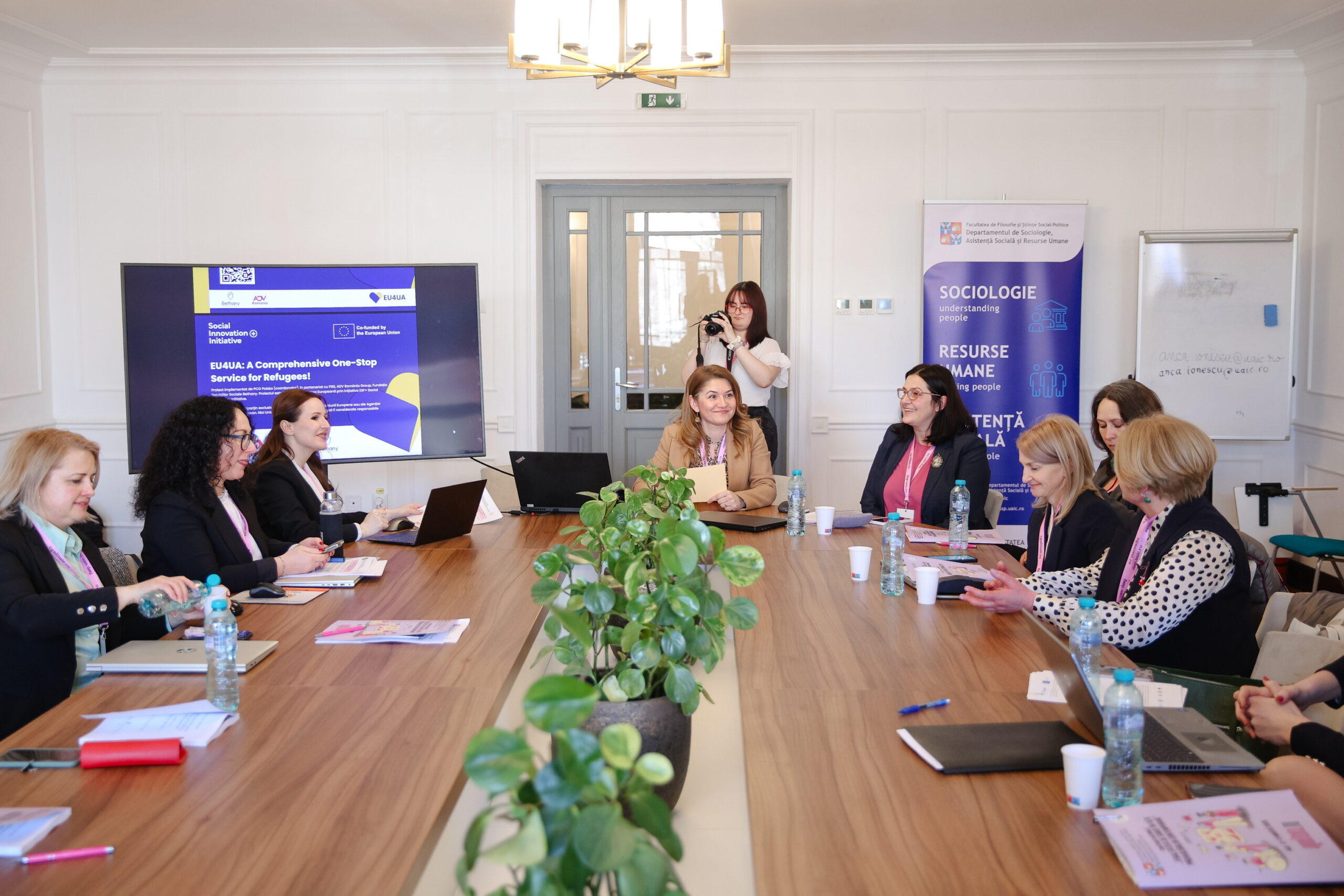
On June 6, the EU4UA team took an important step in shaping the research that will fuel its transnational blueprint to support Ukrainian refugees. Representatives from Bethany Social Services Foundation, ADV Romania, and the Al. I. Cuza University research team met to align on methodology, tools, and next steps for developing integrated, evidence-based intervention models.
At the heart of the meeting was a shared commitment to design holistic, human-centered services. The teams discussed how to map and evaluate successful models of support—those already working in Romania, Poland, Spain, and the Baltic region—and use those insights to shape new occupational standards and intervention pathways.
Angela Achiței (ADV Romania) proposed a two-phase strategy: immediate implementation of a research-backed model and a long-term plan to translate the findings into scalable solutions—curricula, training frameworks, and even policy proposals.
The group confirmed that both quantitative and qualitative tools will be used. Interviews with Ukrainian beneficiaries, document analysis, and questionnaires will be developed in the coming weeks.
There’s a strong push to ground this work in real experience. FSS Bethany will identify former beneficiaries for interviews, while partners from other countries will be consulted via a shared data collection template. Ramona Marian (ADV Romania) and Romeo Asiminei (academic partner) emphasized the importance of collaborating with UNHCR’s Romanian network, including hosting a focus group or attending one of their national coordination meetings.
The meeting ended with a clear list of follow-up tasks and the commitment to reconvene soon.
“We are not just researching—we are building a roadmap for how Europe can better support refugees. This blueprint will be more than a deliverable. It will be a tool for long-term change.” said Angela.
Next steps:
-
Draft and circulate first version of research tools
-
Collect national data on service models across partner countries
-
Begin interviews with Ukrainian beneficiaries
-
Align research with existing European occupational standards
-
Prepare future meetings with UNHCR’s refugee support network
The EU4UA blueprint is designed to be lived, tested, and refined in real-world settings—with input from those on the front lines of refugee support.

Leave A Comment