

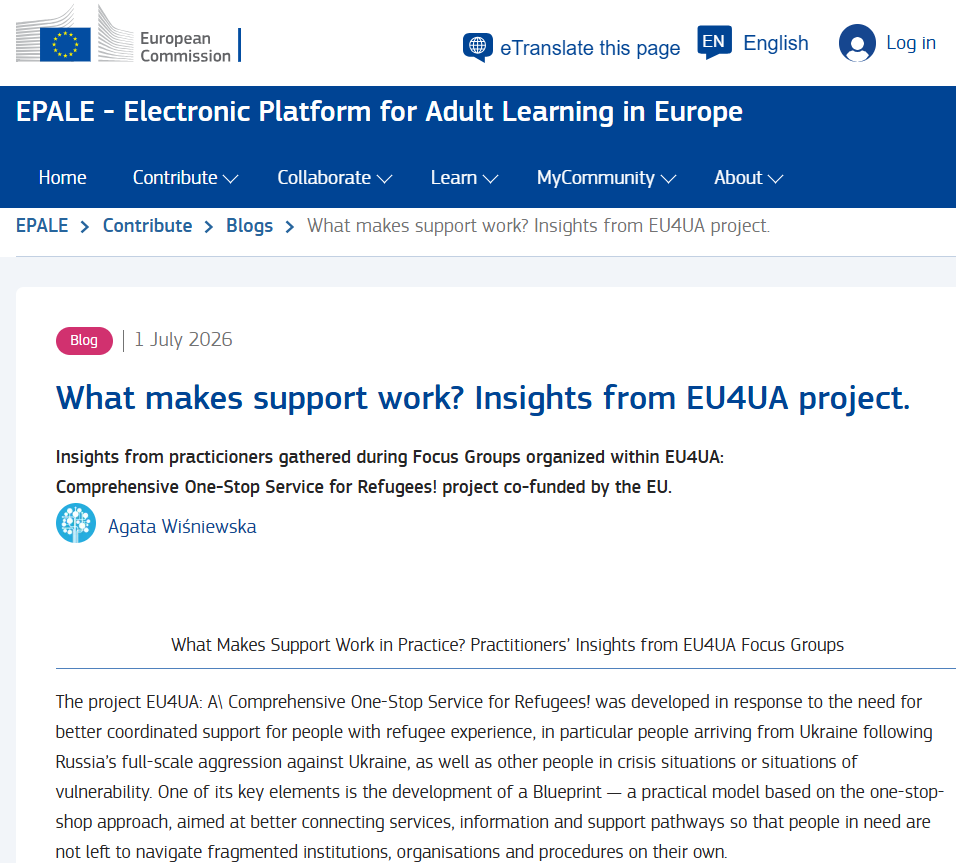
A new article published on EPALE, the Electronic Platform for Adult Learning in Europe, shares key insights from practitioners involved in refugee support in Poland and Romania.
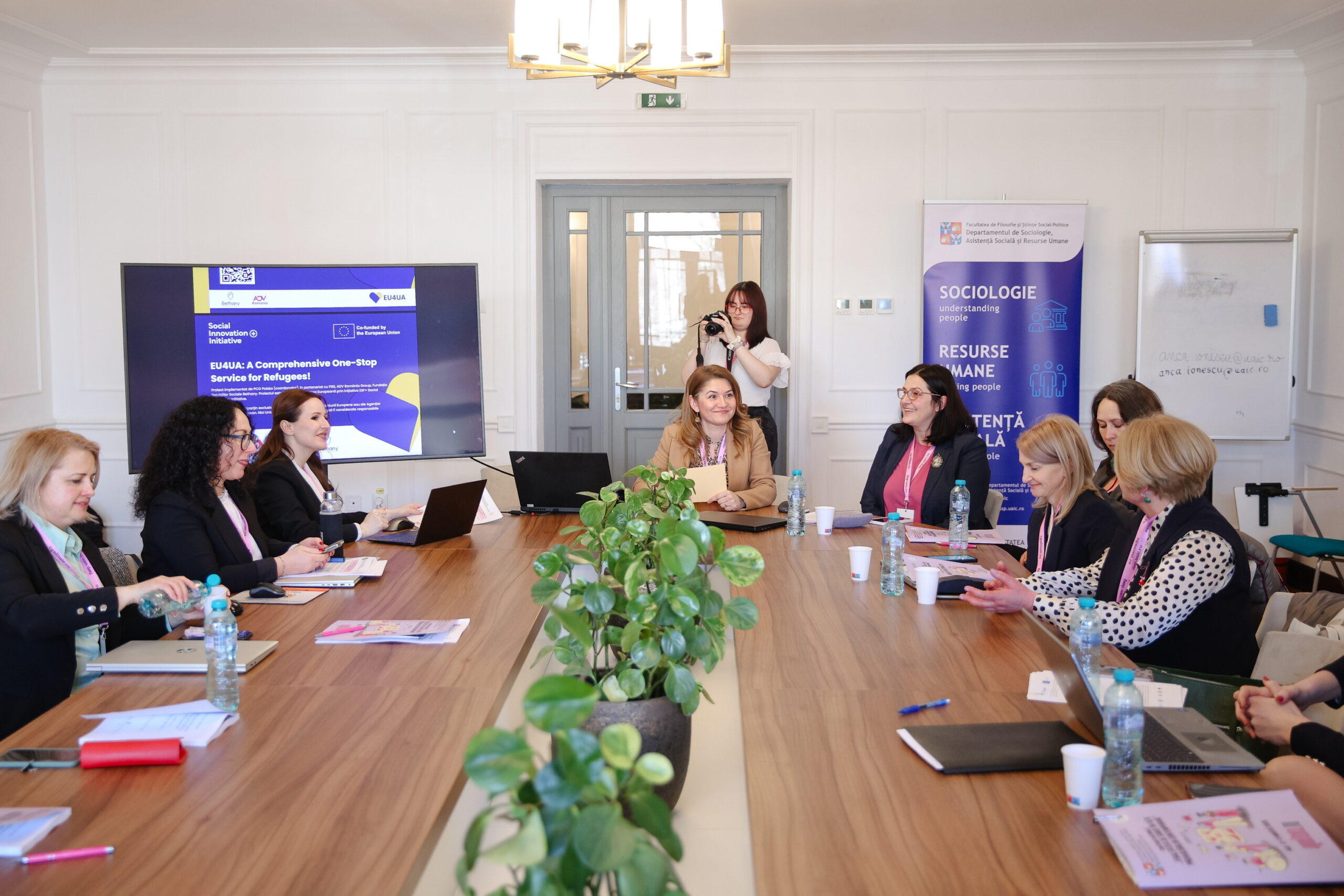
Written by Agata Wiśniewska, project coordinator at PCG Polska, the article presents findings gathered during EU4UA focus groups organised as part of the project EU4UA: A Comprehensive One-Stop Service for Refugees!
The publication raises an important question for everyone working in social support, integration and adult learning:
What makes support truly work for people who need to navigate complex services in a new country?
The answers shared by practitioners point to a clear direction: support must be easier to understand, better coordinated and flexible enough to respond to real-life situations.
Practitioners call for clearer guidance from the first contact
One of the strongest messages from the focus groups was the need for clear guidance from the first interaction with the support system.
Practitioners from Romania and Poland stressed that access to support is not guaranteed only because services formally exist. People also need to understand:
- where to start;
- which steps to follow;
- what documents are needed;
- who can guide them further;
- what happens after registration or first contact.
This insight is essential for the EU4UA Blueprint, a practical model based on the one-stop-shop approach. The Blueprint aims to connect services, information and support pathways so that Ukrainian families seeking safety are not left to navigate fragmented procedures on their own.
The focus groups showed that first contact should not be treated as a separate administrative moment. It should become the starting point of a clear and reliable support pathway.
Support must adapt to different needs
The EPALE article also underlines the importance of flexible support.
Practitioners explained that people seeking support have different levels of independence, information, confidence and access to resources. Some may only need orientation and clear information. Others may require guidance, accompaniment, follow-up or longer-term case management.
For EU4UA, this means that the one-stop-shop model should not assume a single profile or a single linear path.
A useful support model should be:
- structured enough to guide professionals;
- flexible enough to respond to individual situations;
- simple enough to be used under pressure;
- clear enough to support both frontline workers and people seeking help.
This is especially important in crisis contexts, where long procedures and complex forms may not be realistic in the first phase of response.
Coordination is more than placing services under one roof
Another key finding concerns coordination.
The focus groups showed that a one-stop-shop does not always need to mean one building or one institution. What matters is whether different actors work as a connected support ecosystem.
A coordinated ecosystem can include:
- public institutions;
- NGOs;
- social services;
- employment support actors;
- health providers;
- humanitarian organisations;
- community-based initiatives;
- adult learning and training providers.
Their work becomes more effective when roles are clear, referral pathways are reliable and follow-up is not left to chance.
The article also points to the need for a clear relationship between public institutions and NGOs. Public institutions provide responsibility, continuity and the framework for support, while civil society organisations can bring flexibility, field experience and rapid mobilisation.
Communication is part of access
The article published on EPALE makes a strong point about communication.
Language barriers, unclear instructions and different institutional procedures can prevent people from accessing support, even when services are available. For practitioners, communication is not a secondary detail. It is part of how access is created.
In practice, this means:
- using plain language;
- offering clear instructions;
- supporting translation and interpretation where needed;
- creating shared terminology between organisations;
- giving frontline workers practical tools to explain the support pathway;
- making referrals easier to understand and follow.
For EU4UA, this confirms that the Blueprint should include more than a list of services. It should offer practical guidance on how people move through the system and how professionals can support them along the way.
From focus groups to a practical blueprint
The insights shared on EPALE are part of the wider EU4UA process of developing, testing and improving an evidence-based Blueprint for the social and labour market integration of Ukrainian refugees.
The EU4UA project brings together partners from Poland, Romania, Lithuania, Spain and Belgium, combining field experience, research, social innovation and European cooperation.
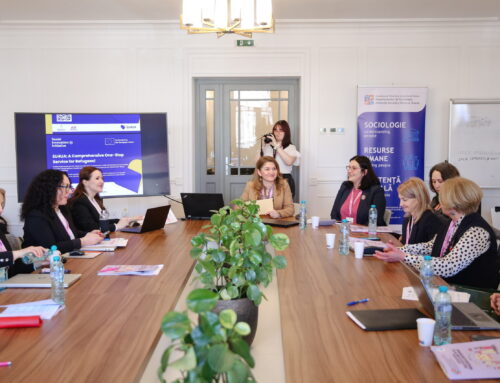
The focus groups organised in Poland and Romania contributed directly to the development of the Blueprint by showing what practitioners need from such a tool:
- clarity after first contact;
- realistic procedures for crisis situations;
- flexible support pathways;
- clear roles for institutions and NGOs;
- practical guidance for referral and follow-up;
- communication tools that work for both professionals and people seeking support.
Why this matters for adult learning
The EPALE publication also connects EU4UA to the adult learning community.
Accessing support in a new country often involves learning: understanding institutions, asking for help, preparing documents, finding employment pathways, communicating with service providers and gradually rebuilding independence.
In this sense, support work and adult learning are closely connected. Every clear explanation, every referral and every accessible tool can help people regain orientation and confidence.
A step forward for European knowledge sharing
By sharing these insights on EPALE, EU4UA contributes to a wider European conversation on coordinated support, social inclusion and practical learning in crisis contexts.
The article shows that effective support is not built only through policies or services. It is built through pathways that people can understand, professionals can apply and institutions can coordinate.
Read the full article on EPALE to discover how practitioners from Poland and Romania see the conditions that make support work in practice.
________
The project “EU4UA: A Comprehensive One-Stop Service for Refugees!” is implemented by PCG Polska (coordinator) in partnership with FISE, ADV Romania, Bethany Social Services Foundation, HumanDoc Foundation, Lietuvos socialinio verslo asociacija (LiSVA), FAEDEI, ENSIE and Diesis Network.
The project is funded by the European Union under the ESF+ Social Innovation+ (SI+) initiative. The views and opinions expressed are those of the authors and do not necessarily reflect those of the European Union or the European Social Fund Agency. Neither the European Union nor the granting authority can be held responsible for them.

Leave A Comment