

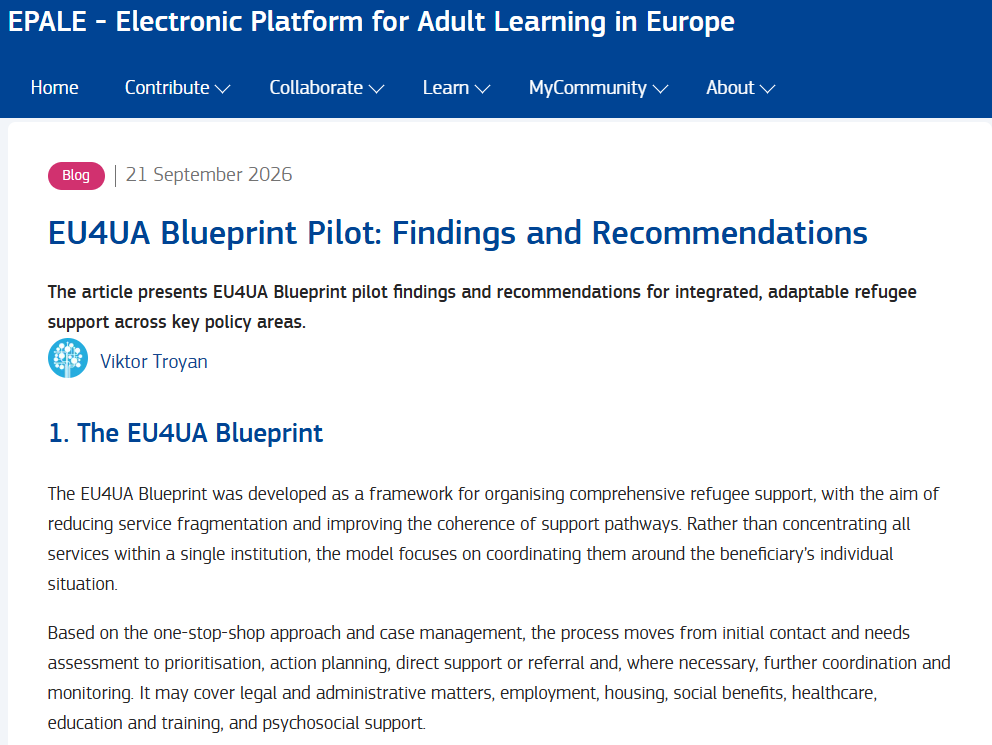
The findings from the EU4UA Blueprint pilot in Poland and Romania are now featured on EPALE, the European Platform for Adult Learning in Europe.
Written by Viktor Troyan from project partner FISE, the article brings together lessons from testing the Blueprint with Ukrainian people and the specialists supporting them. It looks beyond whether individual tools worked and asks a more important question: what does it take to build a support system that guides people from identifying a need to achieving a concrete outcome?
Testing the model in real-life support
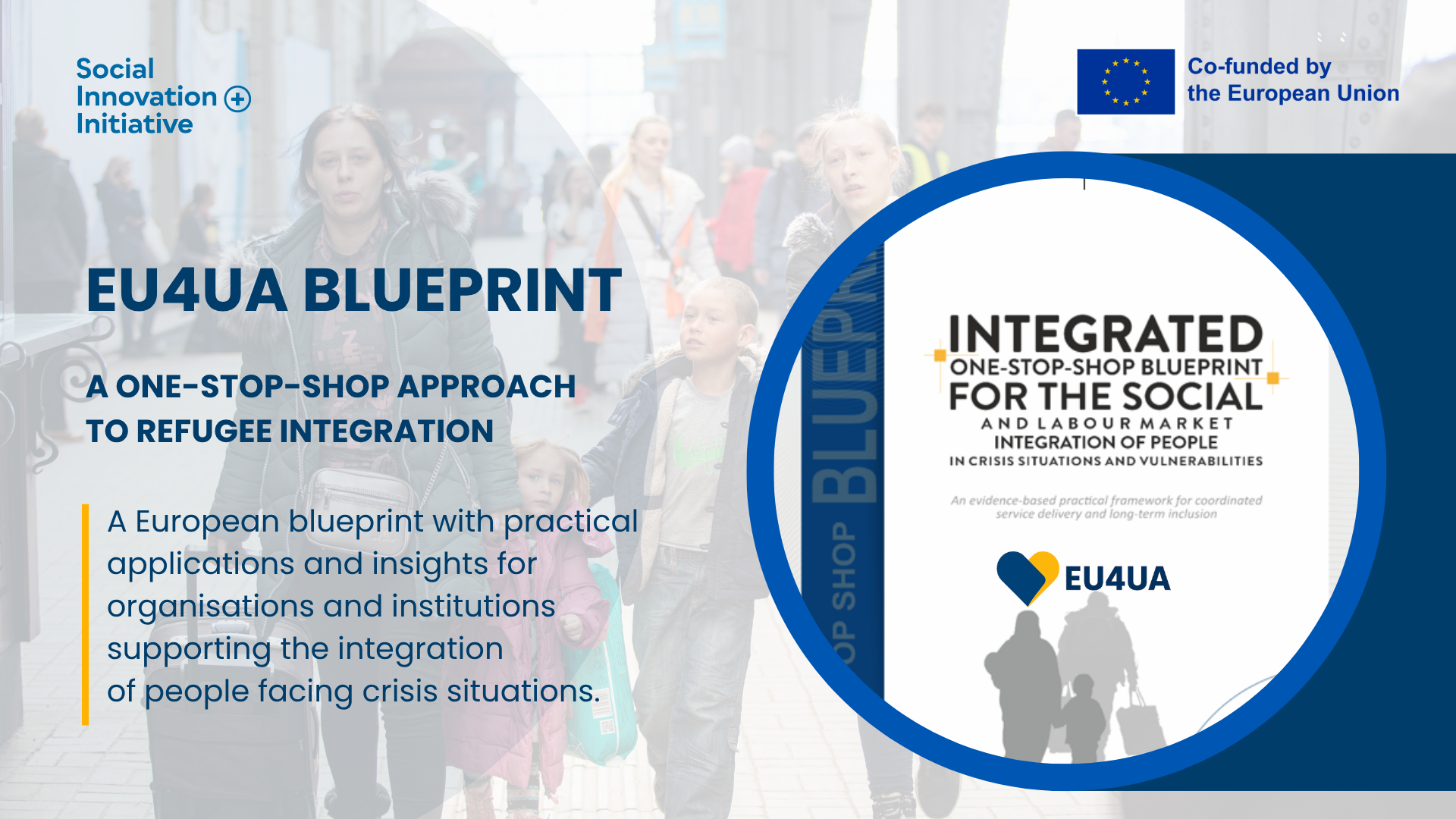
The EU4UA Blueprint was developed to help reduce fragmentation between services supporting the social and labour market integration of Ukrainians seeking safety in Europe.
Its approach combines comprehensive needs assessment, case management and the one-stop-shop principle. The aim is not to place every service under one roof. Instead, services and organisations should work together around each person’s situation.
The pilot tested this approach in Poland and Romania under real-life service conditions. Ukrainian participants and professionals working in migrant and refugee support tested selected tools, while surveys, focus groups, operational data, Training of Trainers activities and external expert assessments provided different perspectives on how the model works in practice.
Five lessons from the pilot
One of the strongest findings is that a comprehensive assessment matters. It can reveal barriers that may not be visible during the first conversation and help specialists understand how employment, housing, health, language, education, legal matters and family circumstances interact. But assessment alone does not create change.
The pilot highlighted the need for a clear path from identifying a need to deciding what happens next: setting priorities, agreeing an action plan, providing direct support or making an effective referral, following progress and checking whether the expected outcome was achieved.
A second lesson concerns coordination. Giving someone the contact details of another service is not always enough. Stronger referral systems require clarity about who takes responsibility for the next step, how information is transferred and whether the person actually reaches the support they need.
The pilot also confirmed the important role of practitioners. Specialists frequently adapted the tools to the person and situation in front of them. This suggests that tools should support professional practice, rather than become rigid scripts.
Another key finding is the need to combine common standards with flexibility. The same institutional structure cannot simply be copied from one city or country to another. Legal frameworks, available services, resources and institutional responsibilities differ. The Blueprint therefore points towards a common operational core that can be adapted to national and local realities.
Finally, the evaluation calls for greater attention to outcomes. The number of activities completed tells only part of the story. What ultimately matters is whether people can access the services, employment opportunities, training, healthcare, legal support or other solutions identified through the process.
From pilot findings to the final Blueprint
These findings are feeding directly into the further development of the EU4UA Blueprint.
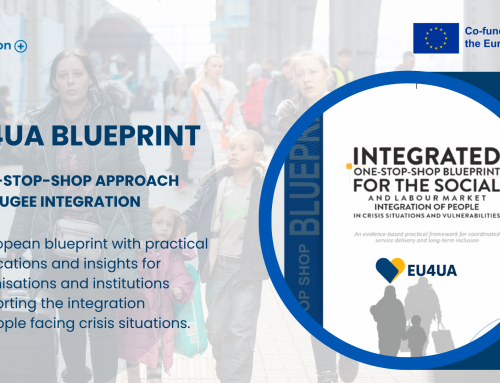
The project was designed around this process of research, development, testing and refinement. The final Blueprint will bring together integrated services such as employment guidance, vocational training, language learning, legal support, healthcare and psychosocial support, alongside guidance on partnerships, implementation and sustainability. It is planned as a public resource available in English, Polish, Romanian, Lithuanian, Spanish and Ukrainian.
The goal is a resource that organisations and public institutions can adapt to their own context while keeping the person and their individual pathway at the centre.
The EPALE publication takes these lessons beyond the project partnership and into the wider European community of practitioners, educators and policymakers. This is an important next step for EU4UA: turning what was learned through implementation into knowledge that others can use.
Read the full article, EU4UA Blueprint Pilot: Findings and Recommendations, by Viktor Troyan, FISE, on EPALE.


Leave A Comment